ServicesConstruction Debris
Construction Debris Removal in Conyers
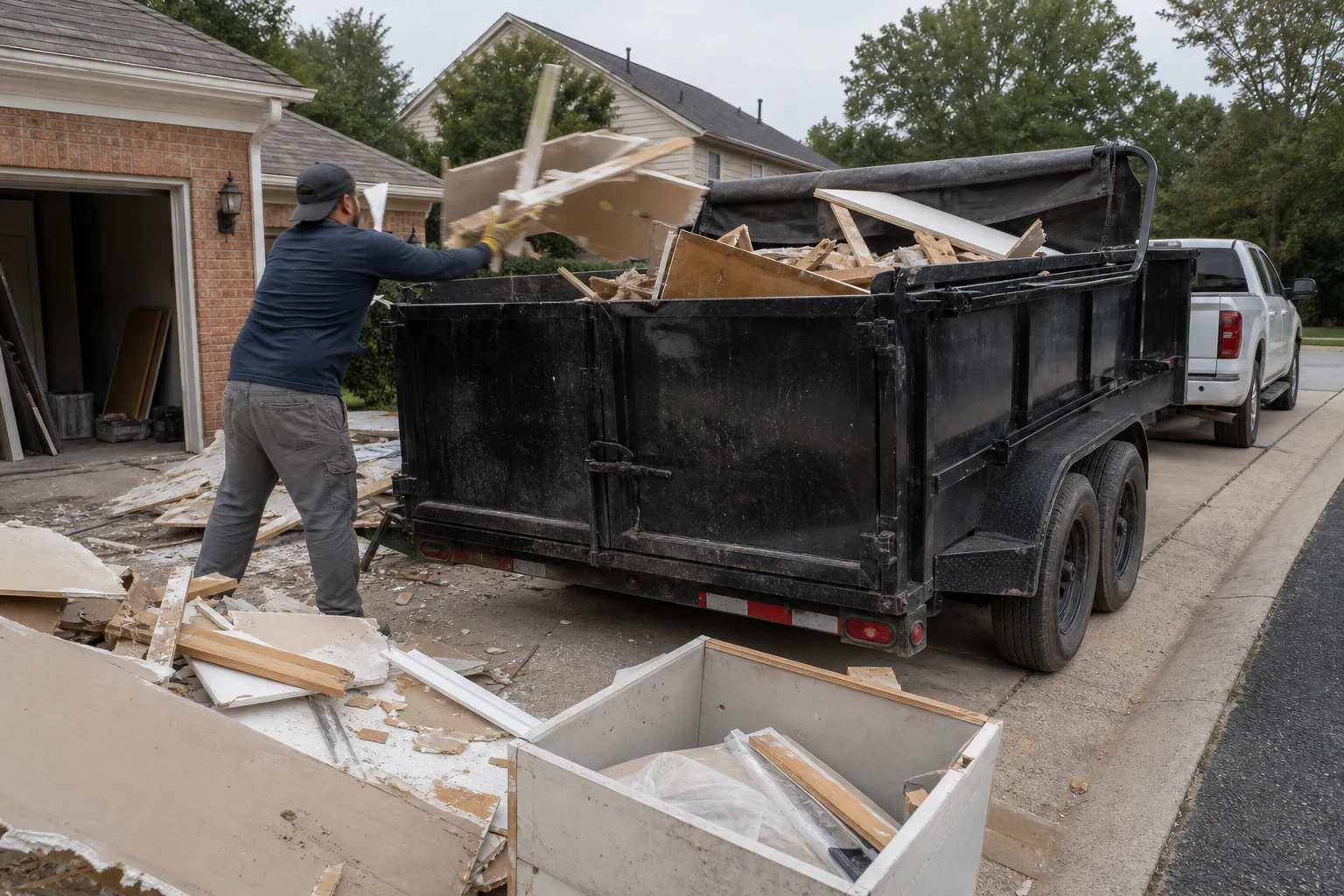
Remodels in older houses leave heavy, awkward waste: plaster and lath, cast iron drain pipe, tile set in mortar, old cabinets. We load it from your home, driveway or yard, haul it to the right facility and sweep up behind us.
What we mean by construction debris
Construction debris is the waste left once walls, floors or fixtures have been torn out. Newer houses mostly leave drywall scraps and packaging. Older ones leave heavier, clumsier material: three-coat plaster still fastened to wood lath, tile set in a mortar bed, galvanized and cast iron pipe, and framing studded with old cut nails.
We do the loading and the hauling, so the pile isn't parked on your driveway for weeks. In Georgia that counts, because summer storms soak drywall and cardboard until the pile is far heavier than when it was set out. Wet gypsum crumbles, stains the concrete and is tougher to pick up.
Call us for a finished or paused project at your home, whether you did the work or a contractor left the cleanup behind. If what's left is mostly household stuff instead of building material, our general junk removal service suits it better.
What we haul and how we handle it
Plaster, lath and drywall
Plaster is roughly twice as heavy as drywall per square foot, and lath strips are full of nails. We bag the loose material, bundle lath so it does not shed, and carry it out without dragging it across your floors.
Lumber and framing
Studs, joists, subfloor and trim from houses built decades ago come out with nails and screws still in them. We load them so the sharp ends stay inside the truck and off your lawn.
Old fixtures and plumbing
Cast iron tubs, vanities, toilets, sinks and runs of galvanized or cast iron pipe. A cast iron tub can top 300 pounds, so we plan the carry route and use straps and a dolly instead of muscling it down the steps.
Flooring and tile
Carpet with pad, hardwood strips, and ceramic tile still set in mortar or stuck to backer board. Mortar-bed tile is dense, so it goes into the truck in small, manageable loads.
Roofing and siding tear-off
Asphalt shingles, felt underlayment, wood siding and fiber cement pieces from exterior projects. We pick up from tarps or the ground and rake for stray nails where shingles landed.
Sweep-up when we finish
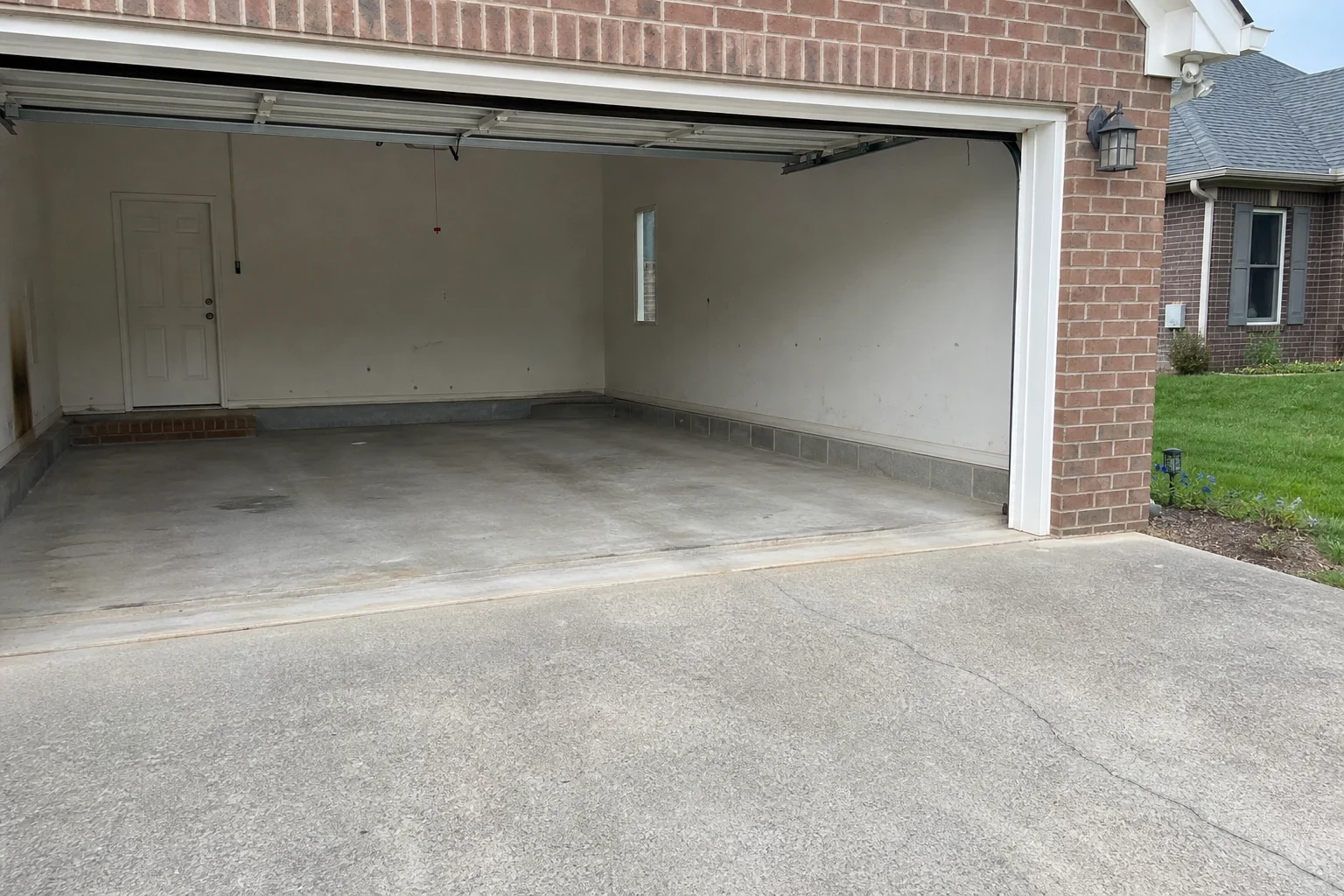
After the last load we sweep the driveway, garage floor or room where the debris sat. You get the space back, not a cleared spot with grit and screws left in it.
Signs it is time to clear the debris
The pile is blocking the work
If your contractor or you cannot reach the next part of the job, the debris is now costing time. Clearing it lets the drywall go up or the new floor go down.
Rain has hit it
Soaked drywall and cardboard get heavy and start to break down. Wet wood stacked on grass can kill the lawn underneath and invite termites closer to your foundation.
Nails are working their way into the yard
Lath, trim and shingles shed nails as they are moved and rained on. Those end up in tires, mower blades and bare feet.
Your trash service will not take it
Most curbside pickup excludes building material, especially heavy loads of plaster, tile or shingles. A bagged pile at the curb can sit there for weeks.
The project is done but the garage is not
Leftover materials and scrap often end up stacked in the garage. If you cannot park inside months later, it is time to clear it out.
How a debris pickup works
- 1
Tell us about the pile
Let us know what the project was and about how much is left. Debris from a bathroom gut in an older home looks nothing like a deck tear-off, and knowing which it is tells us what equipment to bring.
- 2
We see it before pricing
The on-site estimate is free with no obligation, so the price reflects what's really there. You get the number upfront, with no hidden fees, before any loading starts.
- 3
We watch for materials that need testing
Some older-house materials should be tested first, like 9-by-9 vinyl floor tile, certain pipe insulation and old paint. When we spot something like that, we flag it and ask you to get it tested instead of loading it without knowing.
- 4
Carry-out and loading
Door frames and walkways on the route get protected, then we carry and load. Tubs, tile and other heavy pieces leave on dollies with straps.
- 5
Hauling and sweep-up
Metal heads to scrap, clean lumber and concrete get split out wherever a facility takes them, and everything else goes to the right disposal site. Before leaving, we sweep.
How debris removal is priced
Truck space and weight drive most of a debris price. Two piles of the same size can cost different amounts when one is plaster and tile and the other is drywall offcuts. We price it after we see it, and the upfront number carries no hidden fees.
- Volume
- The share of the truck the load takes up matters most. Demo from one room and a whole-house gut are very different jobs.
- Weight and density
- Plaster, tile, concrete and shingles weigh a lot for the space they fill, and disposal costs more for them than for an equal amount of wood or drywall.
- Access and carry distance
- A pile in the driveway goes on the truck quickly. Debris upstairs, in a crawlspace or past a narrow stairway takes longer.
- Material mix
- Sorted loads, such as only metal or only clean wood, can sometimes go to recycling or lower-cost outlets. A mixed pile is handled as mixed waste.
Common questions about debris removal
Something not covered here? (404) 999-0644
Does the debris need to be bagged or sorted first?
It doesn't. We load loose piles, bags and bundles just as they are. If the project is still going, setting metal in a separate pile can help, but you don't have to.
Do you haul away old plaster and lath?
Yes, and it's among the loads we see most from older houses. Since it's heavy and packed with nails, we bag and bundle it before the carry. That keeps dust and bits off your floors.
Can you take material that may have asbestos or lead paint?
Anything that could contain asbestos stays put until it's been tested and cleared, because state rules assign that removal to an abatement contractor. For painted trim and siding older than the late 1970s, we can go over what you have when we look at the pile.
Who does the work at my place?
Our own crew loads and hauls. We're enrolled in E-Verify, so each person we send has confirmed eligibility to work.
How quickly can you come get it?
We offer same-day and next-day service, based on our schedule when you call, and we confirm the time with you by phone.
The contractor is done but left me the cleanup. Can you handle it?
Yes, we get that call a lot. We pick up the scrap, packaging and torn-out material wherever it ended up, load it all in a single visit and sweep the area so the room or driveway is usable again.
Clear the remodel leftovers off your property
Let us know what the project left and where it is. We'll come see it, give you an upfront price and haul it as soon as you give the word.